
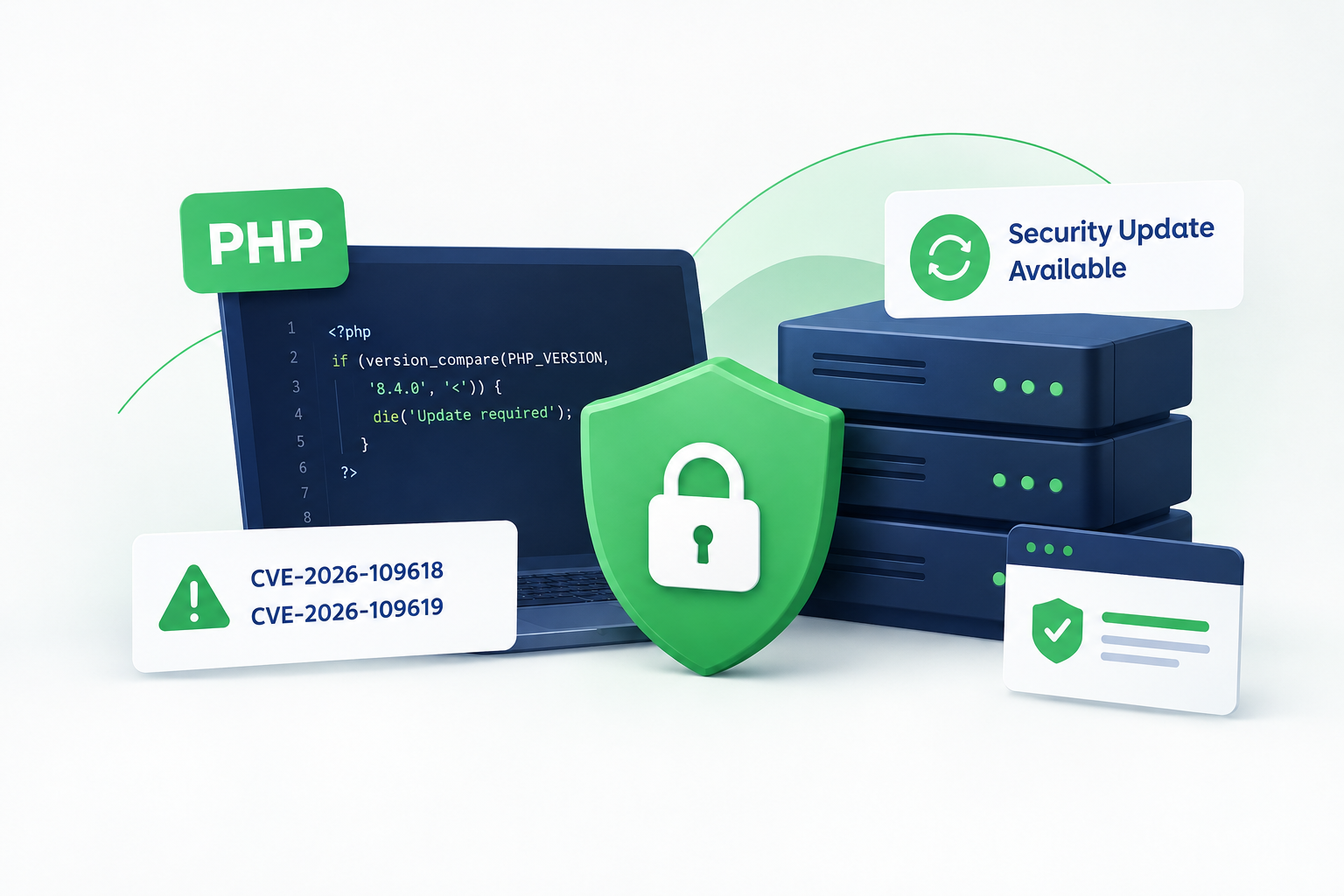
On October 20 and 21, 2026, the PHP ecosystem faced a major security alert after two critical vulnerabilities were disclosed. Tracked as CVE-2026-109618 and CVE-2026-109619, the flaws could allow remote code execution on vulnerable servers. The PHP security team released fixes on October 21, and European cybersecurity authorities urged organizations to identify affected systems and apply updates promptly.
For businesses operating websites, SaaS products, customer portals, or custom applications, this incident highlights an essential reality: software security depends on more than writing functional code.
Why the October 2026 PHP security alert matters
PHP powers websites and backend applications, including WordPress platforms and custom systems. A vulnerability in the runtime can therefore affect an application regardless of its design or business logic. Depending on the environment, successful exploitation could expose sensitive files, application data, or other server resources.
The central risk is remote code execution: an attacker may cause a vulnerable server to run unauthorized instructions. A disclosed vulnerability does not automatically mean every PHP website has been compromised. Exposure depends on the PHP version, server configuration, available mitigations, and whether security updates have been installed.
Which applications should businesses review?
Prioritize internet-facing systems that rely on PHP, including:
- WordPress websites and WooCommerce stores.
- Custom PHP applications and business portals.
- SaaS platforms with PHP-based backend services.
- APIs and integrations running on affected PHP versions.
- Internal systems connected to public-facing applications.
Updating WordPress themes and plugins alone is not enough when the vulnerability affects the PHP runtime. The server’s PHP installation must also be checked and updated where necessary.
Five actions to reduce PHP security risks
- Identify affected PHP versions. Audit production servers, staging environments, containers, and other application environments. Compare installed versions against the official PHP security advisories.
- Apply official security patches. Upgrade to a supported, fixed PHP version compatible with the application. Test the update where possible, then verify that production runs the patched version.
- Strengthen server and application access. Review administrative permissions, SSH access, service accounts, database credentials, and access to sensitive configuration files. Apply least-privilege principles.
- Review logs and monitor suspicious activity. Check web server, PHP, authentication, and application logs for unusual requests, unexpected file changes, suspicious processes, or unauthorized access. If compromise is suspected, investigate rather than assuming a patch alone resolves it.
- Establish continuous security maintenance. Maintain a software dependency inventory, patching policy, vulnerability assessment schedule, and incident response process.
How Insimplo helps businesses build more secure digital platforms
At Insimplo, secure infrastructure is an important part of building reliable digital solutions. Our work combines software engineering, custom AI development, and infrastructure design to support business systems beyond their initial launch.
Depending on each organization’s requirements, Insimplo can help with infrastructure security reviews, secure application development, cloud infrastructure protection, data protection, and ongoing maintenance planning. The right measures depend on the existing architecture, risk profile, regulatory obligations, and operational constraints. Security improvements should follow a technical assessment rather than assumptions about the environment.
Security is an engineering decision, not a last-minute fix
The October 2026 PHP vulnerabilities are a reminder that even mature technologies require continuous maintenance. Businesses that understand their dependencies, apply security updates promptly, and monitor their infrastructure are better positioned to manage emerging threats.
Insimplo helps businesses design, develop, and maintain intelligent digital systems with security and reliability built into the engineering process. Planning a new platform or reviewing an existing application? Visit Insimplo to discuss your software and infrastructure requirements.
Frequently asked questions
Can PHP vulnerabilities affect WordPress websites?
Yes. WordPress runs on PHP, so a vulnerable PHP runtime can create risk even if WordPress core and plugins are up to date.
Does updating WordPress fix a PHP vulnerability?
Not necessarily. The PHP runtime is managed by the hosting or server environment and must be checked and updated separately where required.
How can a company know if its application is vulnerable?
Inventory PHP versions, review official advisories, verify server configurations, and assess whether required patches have been applied.
Can secure infrastructure prevent every cyberattack?
No infrastructure can guarantee complete protection. Layered security, timely patching, access controls, monitoring, backups, and incident response help reduce risk and limit the impact of attacks.